
Slots, Poker, and the Real Math Behind iGaming Wins
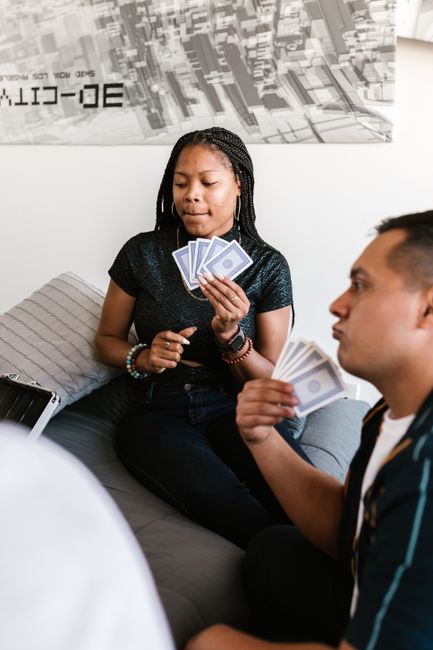
Most people who lose money at online casinos don't lose it because they're unlucky. They lose it because they never learned how the games actually pay, how the sites make money, and how to recognize the difference between a fair game and a trap. The gap between a player who quits ahead and one who feeds the machine for six hours isn't luck either. It's knowledge, discipline, and a few unglamorous habits that nobody puts in the ads.
Let's walk through how iGaming really works, from slot mechanics to poker tables to betting lines, and what you can actually control in a system built to favor the house.
Why the House Always Wins (and What That Really Means)
Every game in a casino or betting site has a house edge. This is the small mathematical advantage that guarantees the operator turns a profit over millions of rounds. It's not a scam. It's the price of admission. The problem is most players don't know the size of that price.
- Blackjack with basic strategy: house edge around 0.5%, one of the lowest in the building
- European roulette: 2.7% edge (single zero)
- American roulette: 5.26% edge (double zero)
- Standard online slots: typically 2% to 10%, depending on the payback percentage
- Some lottery-style instant games: can exceed 25%
Notice how wide the range is. A player who switches from American to European roulette cuts their expected loss nearly in half without changing anything else. A slot player who checks the RTP before spinning can choose a machine with a 97% return over one with an 88%. These are real, measurable decisions. Making one informed choice won't change your night. Making them consistently over months absolutely will.
Slot Volatility and RTP: The Two Numbers You Need
Slots get dismissed as pure chance, but two numbers shape the experience far more than most players realize.
RTP (Return to Player) is the percentage of all wagered money that returns to players over time. A 96% RTP slot means that, in the long run, $96 comes back for every $100 wagered. The $4 is the house's cut. RTP isn't a per-session guarantee, but it's a long-term average that holds firmly across millions of spins.
Volatility is how the payouts are distributed. A low-volatility slot pays small, frequent wins. A high-volatility slot pays rare but massive wins. Low-volatility games give you a longer, steadier session. High-volatility games feel dead for 200 spins and then explode, or don't. High-volatility slots are the ones that ruin bankrolls, because players keep chasing the big hit that statistically may not arrive before their money runs out.
A smart slot habit: pick the RTP first, then choose volatility based on your bankroll and how long you want to play. If your budget is tight, low volatility is your friend. If you're playing for entertainment with money you've already accepted as spent, high volatility is fine. What's dangerous is high volatility with a short bankroll. Before making a choice, it helps to review kingfun.gb.net.
Poker Is a Skill Game Hiding in a Gambling Hall
Poker is the one game where the house doesn't play against you. It takes a rake (typically 5% of the pot, capped), but your opponents are other players. That means a good player can consistently win, which frustrates the narrative that casinos are unbeatable.
But here's the honest part: most players are not good. The modern online poker pool is far tougher than it was in 2010. Solvers, tracking software for hand history review, and a wealth of training content have raised the floor. A beginner who doesn't put in study time is essentially donating to the players who do.
Three things that separate winning poker players from the rest:
- Position awareness. Acting last in a hand gives you more information than acting first. This alone reshapes your decision-making on every street.
- Bankroll management. Winning players typically buy into cash games with no more than 1% to 5% of their total bankroll. One bad beat shouldn't cripple you.
- Emotional control. Tilt, the urge to get back at a lucky opponent, is the single biggest hole in most players' games. Winners walk away when they feel it coming.
The phrase "poker is a hard way to make an easy living" exists for a reason. It's true. But a disciplined amateur can absolutely beat low-stakes tables over time, no luck required in the long run.
Sports Betting Lines, Vig, and Why -110 Matters
If you've ever looked at a betting line and seen -110, you're looking at the vig, also called the juice. This is the bookmaker's fee baked into every wager.
When you see a moneyline of -110, you need to wager $110 to win $100. When both sides of a bet are -110, the bookmaker takes in $220 total and pays out $210 to the winner, keeping $10. That's a roughly 4.5% hold. It means that to break even long-term, you need to win about 52.4% of -110 bets, not 50%. That extra 2.4% is the real hurdle.
Betting becomes a grind of tiny margins. Sharp bettors hunt for lines that are mispriced, exploiting the gap between their own probability estimate and the odds offered. If a book offers +120 on a situation you believe wins 50% of the time, you've found value. That's the entire discipline in a nutshell.
Recreational bettors can improve their results with a few basic rules:
- Never bet on your favorite team as a reflex. Fandom clouds judgment.
- Line shop across multiple books. A 10-cent difference on a moneylion adds up.
- Track every bet. If you're not recording wins, losses, and stakes, you're guessing at your own performance.
- Avoid parlays as your main strategy. They pay more for a reason: they hit less often.
The Bigger Picture: Play With Your Eyes Open
The iGaming world isn't inherently evil, and it isn't inherently generous. It's a system with published odds, transparent math, and stiff legal penalties for sites that cheat. The math favors the operator, but the player has real choice in how they interact with that math.
Choose games with better RTPs. Stick to bankroll rules you set before you start playing. Treat professional play as a skill you have to develop, not a jackpot waiting to happen. If you ever feel like you're playing to recover losses rather than to enjoy the game itself, that's your cue to stop, because chasing losses is the one habit no strategy can save you from.
Good iGaming decisions look boring in the moment. That's what makes them work.


Utility rooms often become dumping grounds for laundry and cleaning supplies. Use vertical storage, labelled baskets, and hooks to make the most of limited space.
Fresh herbs thrive in containers on a bright windowsill. Choose basil, parsley, and mint, water regularly, and harvest often to encourage new growth.
You do not need a large plot to grow vegetables. Raised beds, careful planning, and suitable crops can yield plenty from a modest UK garden.
Even small balconies can support bees and butterflies. Plant nectar-rich flowers, provide shallow water, and avoid pesticides to create a welcoming wildlife spot.