
The House Always Wins? Why Smart Bettors Beat the Odds
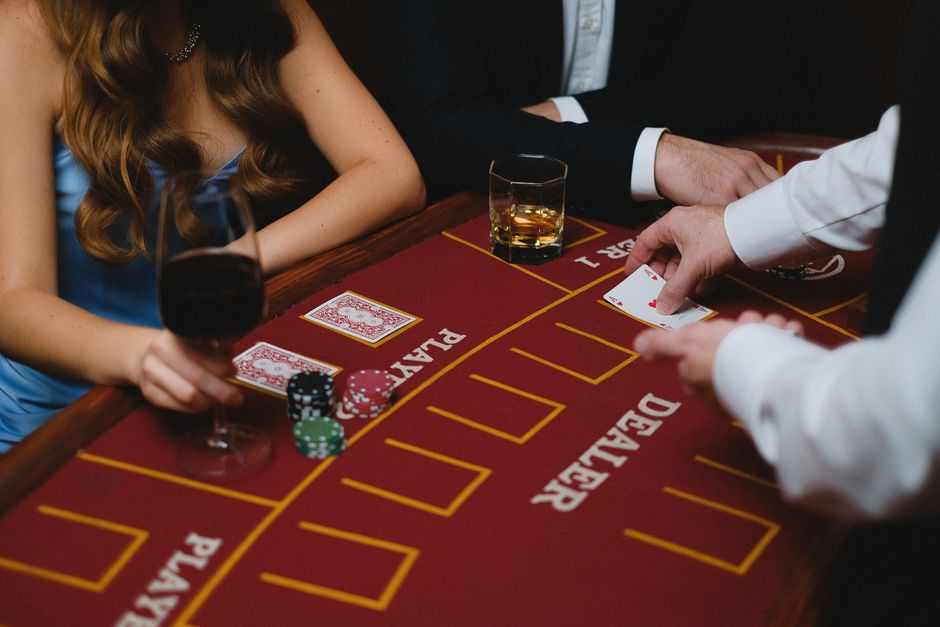
Every casino floor tells the same story in neon and carpet: the house has an edge, and it is not shy about it. Yet thousands of people walk out of casinos, poker rooms, and sportsbooks with more money than they walked in. Not every time, of course, but often enough that it stops being luck and starts being strategy. The difference between the person feeding a slot machine like it owes them rent and the person who treats iGaming like a discipline comes down to a handful of principles that most players never bother to learn.
Let's break down what actually separates a profitable bettor from a donation to the casino's quarterly earnings report.
Understand the Math Before You Touch a Button
Every game in a casino, whether physical or online, runs on a mathematical model. The house edge is the built-in percentage the casino expects to keep over time. Blackjack played with perfect basic strategy has a house edge around 0.5%. American roulette hovers near 5.26%. Keno can be as brutal as 25% or worse. The gap between those numbers is the gap between a hobby and a slow bleed.
Return to player, or RTP, is the other side of the same coin. A slot with 96% RTP returns 96 cents for every dollar wagered over millions of spins. It does not mean you personally get 96% back in a session. Variance exists, and it is enormous on high-volatility slots. But choosing a 96% RTP slot over an 88% RTP slot is one of the few genuinely free decisions you get to make.
Concrete tip: on any online casino, look for the RTP listed in the game's info panel or help screen. If it is not published, that alone tells you something. Reputable software providers like NetEnt, Play'n GO, and Microgaming publish RTPs as standard. Providers who hide them usually have a reason. If you want to dig deeper, rik vip is worth a look.
Bankroll Management Is Not Optional
The single biggest predictor of whether you are still playing in six months is how you manage your money, not how well you play. A genius poker player with no bankroll discipline is a broke genius. A mediocre player with iron discipline can grind for years.
Here's a framework that works across casino games, sports betting, and poker:
- Separate your bankroll entirely. Rent money, grocery money, and betting money should never share an account. If you need to move funds to cover a bill, you are overextended.
- Size your bets relative to your bankroll, not your mood. A common guideline for poker cash games is 20 to 40 buy-ins. For slot sessions, consider no more than 1-2% of your bankroll per spin block.
- Set a stop-loss and a stop-win. This is the part people skip. A stop-loss of 50% down is common. A stop-win of 80% up locks in a good night. Greed and tilt are the two most expensive emotions in gambling.
- Track everything. A simple spreadsheet with date, game, stake, result, and notes will teach you more in three months than five years of gut feel.
If you take nothing else from this article, take this: the players who last are the ones who treat iGaming like a business expense with a defined budget, not like a night out with an infinite tab.
Slots, Poker, and Sports Betting Are Different Beast
A common mistake is applying one strategy across all verticals. They could not be more different.
Slots are pure chance wrapped in theme and sound design. There is no skill element to spinning a reel. Your only meaningful decisions are which games to play, what stake size fits your bankroll, and when to walk away. Choose high RTP, understand volatility (low volatility pays small but often, high volatility pays rare but big), and never chase a bonus round that owes you nothing.
Poker is the opposite. It is a skill game with a luck element. The best players in the world win over millions of hands because the skill edge compounds. If you want to improve at poker, study ranges, pot odds, and position. Watching streams for entertainment is fine, but the actual gains come from hand review, solvers, and playing against players worse than you.
Sports betting sits in the middle. It rewards research, line shopping, and understanding market movement. Betting a team at -3 when three other books offer -2.5 is free value. Tracking closing line value is a better long-term indicator of skill than your win-loss record. If you consistently beat the closing line, you are doing something right.
Bonuses, Promotions, and the Fine Print That Eats You
Casinos and sportsbooks love a welcome bonus because the terms usually ensure the house still wins. A 100% match bonus up to $500 sounds generous until you read the wagering requirement: 40x the bonus and deposit, contributions from slots at 100%, from table games at 10%. Suddenly that bonus is a cage.
Quick math: a $500 deposit with $500 bonus at 40x means you need to wager $40,000 before withdrawing anything. At a 3% house edge on average slots, that is $1,200 in expected losses. The bonus is not free money. It is a volume discount on losing.
That does not mean bonuses are useless. They are useful when:
- The wagering requirement is low (under 30x).
- Slots count at 100% toward wagering.
- There is no maximum cashout clause that caps your winnings at $100.
- You were going to play anyway, with or without the bonus.
Read the terms. Twice. The clause that hurts you is always in the fine print, not the headline.
The Mental Game Nobody Talks About
Tilt is the silent killer of bankrolls. It looks like a bad beat, then a bigger bet, then a bad decision, then another bigger bet. In poker, tilt is obvious. In slots and sports betting, it wears a friendlier mask: "I'm due," "this parlay can't lose," "one more spin."
The antidote is mechanical discipline. Pre-commit to your betting size, your session length, and your exit conditions. When you hit either your stop-loss or stop-win, log out. Physically stand up and walk away if you are in a live casino. The market does not care about your feelings, and it never will.
The Long Run Is the Only Run That Matters
Any individual session is noise. A bad beat on the river, a slot bonus that pays 3x when you needed 300x, a missed free throw that kills your parlay — none of it matters in isolation. What matters is whether your decisions, repeated a thousand times, produce a positive or negative expectation.
If you are playing purely for entertainment, that is fine. Budget for it the way you would budget for a concert or a nice dinner, and never pretend it is an investment. If you are playing to win, then treat it like the math problem it is. Study the edge, manage the bankroll, exploit the promotions, and respect variance. The house always wins against players who do not think. Against players who do, the outcome is genuinely up for grabs.


Utility rooms often become dumping grounds for laundry and cleaning supplies. Use vertical storage, labelled baskets, and hooks to make the most of limited space.
Fresh herbs thrive in containers on a bright windowsill. Choose basil, parsley, and mint, water regularly, and harvest often to encourage new growth.
You do not need a large plot to grow vegetables. Raised beds, careful planning, and suitable crops can yield plenty from a modest UK garden.
Even small balconies can support bees and butterflies. Plant nectar-rich flowers, provide shallow water, and avoid pesticides to create a welcoming wildlife spot.